Five sports offering Indigenous sport programming opportunities at Kelowna 2026 BC Summer Games
“The BC Games Indigenous Participation Program provides an important stepping stone within the broader Indigenous sport pathway in British Columbia,” said Rick Brant, CEO of I·SPARC. “For many youth athletes, this may be their first opportunity to represent their community, experience a multi-sport Games environment, and begin to see what is possible in their sport journey. These experiences help build confidence, community, and connection – creating a strong foundation for future opportunities, including events such as the North American Indigenous Games.”
“These opportunities are about more than competition,” added Lara Mussell Savage, of the Skwá First Nation and Executive Director – Sport, I·SPARC. “They are about connection, representation, and creating pathways where Indigenous athletes can continue to participate, develop, and thrive. I·SPARC is proud to partner with the BC Games and Provincial Sport Organizations to help remove barriers, strengthen pathways, and create more opportunities for Indigenous youth to experience the power of sport and achieve their goals.”
For the first time at the BC Summer Games, Baseball has fielded an All-Indigenous team with representation from six regional zones in a competitive 8 team baseball tournament. This program cultivated with leadership from I·SPARC and Baseball BC high-performance programming over the past two years, starting with regional camps in Takla Lake, Prince George, Williams Lake and then into a provincial ID camp for U-13 to U-15 in Maple Ridge. An Indigenous team was entered into a provincial Kamloops tournament and the success of this team gained strong interest from athletes and family.
Baseball BC continued the programming for BC Summer Games planning, with over 30 Indigenous athletes trying out for only 16 roster spots.
“I am really excited for this team coming together as the players have worked hard to be here,” said Don Hutchinson, Indigenous Team Head Coach. “I am confident the players will compete well and proudly represent their nations and communities. We hope to build player confidence and continue the momentum with a goal to field an All-Indigenous Team for the 2028 North American Indigenous Games.”
Box Lacrosse BC has been an early trailblazer, running All-Indigenous teams dating back to the 2018 BC Summer Games. For 2026, Team Indigenous Box Lacrosse will feature a competitive team with representation from across six zones.
Westbank First Nation will welcome the best young Canoe/Kayak athletes and coaches, as the traditional territory will serve as the host venue for Friday’s competition. This region has never before hosted Canoe/Kayak sprint racing, and through collaborative engagement between the Kelowna 2026 Host Society and Westbank First Nation, sport competition will take place on the traditional waterways of Okanagan Lake. A special Welcome Ceremony before Friday’s competition will celebrate this partnership, acknowledge the land, and send paddlers off to strong competition.
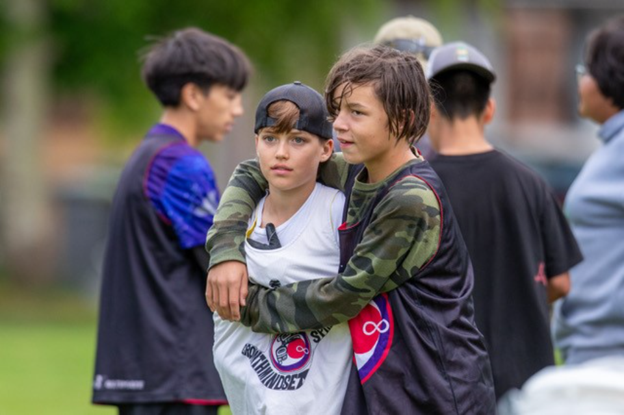
BC Ultimate, in just the second time the sport has participated in the BC Summer Games, will field the first All-Indigenous Ultimate team for the Games, composed off athletes representing three First Nations communities, W̱SÁNEĆ First Nations, Lil’wat First Nation, and Sqwá First Nation, bringing together youth from communities that have built meaningful connections through the sport of Ultimate.
Ultimate as a sport community prides itself on inclusive spirit, co-ed play, and being self-officiated, which all fit well into the culture of a BC Games.
“For many of the athletes on the Indigenous team, simply getting on the bus to Kelowna will already be a major milestone,” said Jimmy Roney, Team Indigenous Ultimate Head Coach. “For some, it will be their first time representing their community in this way, their first time travelling without parents or school staff, their first time competing in an official tournament with non-Indigenous players, and for many, their first time feeling a true sense of belonging within the wider Ultimate community.”
Wrestling BC’s Indigenous pathway initiatives will involve twelve athletes who recognize their Indigenous ancestry out of a total of 122 wrestlers competing at Rutland Senior Secondary.
Serving as more than just targeted sport specific participation initiatives, youth multi-sport events like the BC Games showcase unique opportunities, bring people together, and show athletes that they are part of something bigger.
“It means a lot for our Indigenous athletes and coaches to be competing and coaching at multi-sport events, such as the BC Games as it brings a sense of pride to our youth, our families, our communities and our nations,” said Bernard (Buzz) Manuel Jr., member of the Upper Nicola Band and the Syilx Okanagan Nation and Assistant Coach in athletics for Zone 2 Thompson-Okanagan. Buzz is a BC Games legend having coached in six BC Winter or BC Summer Games in Athletics, Archery and Lacrosse.
“However, beyond that, what it means in the bigger picture with Indigenous Participation at the BC Games, is the forging of relationships between Indigenous athletes and coaches with the various Local and Provincial Sport Organizations. When you build these relationships and when you bring that to the stage of the BC Games it goes beyond the idea of meaningful competition and creates meaningful reconciliation.”
The multi-sport BC Games structure is unique compared with single-sport events, and sport partners can leverage significant accessibility benefits within a unique hosting model. The Games transportation system, with built-in subsidies and equitable delivery, means the Games can be an exceptional sport experience for a wider sport audience. Participants are travelling to Kelowna from as far as Haida Gwaii, Bella Coola, and Fort Nelson. All 93 constituencies in the province of BC have participant representation at these Games, truly bringing the province together in a celebration of sport, culture, and special events.
Many of these sport initiatives have been guided and framed through partnership with I·SPARC.
Sport development pathway opportunities exist for current Summer Games participants in this age group to potentially attend the 2028 North American Indigenous Games in U-15 or U-18 categories in select sports as part of I·SPARC’s Team BC program.
To learn more about the BC Summer Games, visit bcsummergames.ca.