Commercial Tobacco Cessation & Wellness Journey
Connect to Change – Movement is Medicine
Connect to Change, is an eight-week commercial tobacco cessation and wellness journey that recognizes wellness is strengthened through connection to self, family, community, culture, and the land.
Whether you are curious about making a change, thinking about reducing your commercial tobacco use, preparing to quit, or simply exploring your relationship with commercial tobacco, Connect to Change walks alongside you wherever you are on your journey. We recognize that every wellness journey is unique and provide compassionate, culturally safe support that honours your experiences, strengths, and goals.
Through weekly sharing circles, cultural teachings, movement, reflection, and practical commercial tobacco cessation strategies, participants strengthen connections to self, family, community, the land, and the water while building tools to support lasting wellness.
What You Will Experience
Throughout the eight-week journey, participants will explore:
- Understanding commercial tobacco and nicotine addiction
- Identifying personal triggers and managing cravings
- Building healthy routines and supportive daily practices
- Practical coping strategies and mindfulness techniques
- Movement for wellness and holistic health
- Goal setting, reflection, and personal wellness planning
- Cultural teachings and connection to the land and water
- Strengthening relationships and community support
- Preparing for continued wellness beyond the program
Each gathering creates space for meaningful conversations, shared learning, encouragement, and personal growth. Participants are supported by facilitators, guest speakers, Elders, and one another, recognizing that wellness is strengthened through relationships and community.
Our Approach
Connect to Change recognizes that wellness is connected to all aspects of who we are—our relationships, experiences, emotions, culture, and connection to community and the land. We create space for participants to explore change, strengthen their wellness, and move forward in ways that honour their own journey.
Movement is woven throughout the program because wellness is strengthened through our connection to the land, water, culture, and one another. Whether it is walking a forest trail, paddling on a lake or river, tending a garden, or simply spending quiet time outdoors, participants are encouraged to move in ways that feel meaningful, safe, and accessible.
There is no expectation to achieve a certain distance or level of fitness. Every person’s journey is unique, and movement is encouraged in ways that honour individual abilities, comfort, and stage of wellness.


Working Together
Connect to Change is delivered in collaboration with valued partners who share a commitment to Indigenous health and wellness. Together with the Canadian Cancer Society and First Nations Health Authority, we bring together Indigenous knowledge, lived experience, evidence-informed tobacco cessation practices, and holistic wellness approaches to provide meaningful support throughout the journey.
We are honoured to walk alongside you.
Program Curriculum
This program encourages movement on both land and water as you pursue a commercial tobacco-free lifestyle through an 8-week supported journey. Our goal is to promote healthy perspectives while honouring and respecting tradition. We share information about modern approaches to commercial tobacco cessation, while also encouraging participants to connect with cultural teachings, practices, and traditional therapies and medicines to support them along the way.
In circle 1, we explored our relationship with both traditional/sacred tobacco and commercial tobacco. We also wrote down strengths, obstacles, opportunities, and challenges as they relate to quitting or reducing your commercial tobacco use. This week we are going to focus on understanding nicotine, withdrawal symptoms, cravings, and triggers to smoke.
In circle 2, we explored how nicotine affects the body and mind, including its role in cravings and withdrawal. We also began noticing how emotions, social settings, and daily routines can strengthen the urge to smoke.
This week, we turn our focus to understanding your personal triggers – the people, places, situations, and feelings that spark a desire to smoke. Identifying these triggers is an important step toward changing smoking patterns.
Together, we’ll explore ways to gently replace smoking with meaningful and restorative activities, such as movement, creativity, connection, or relaxation. These new habits can help reduce the pull of triggers and support your ability to manage cravings. The focus this week is reflection and beginning to build coping strategies that align with your values and daily life.
As we move deeper into this journey, we celebrate your progress and honour your commitment to yourself and your community. Last week, we explored strategies for managing cravings, withdrawals, and triggers—and now, you’re equipped with a growing toolkit of healthy coping mechanisms.
This week marks a meaningful step forward: the transition from reacting to taking control. It’s important to recognize that every individual’s path to wellness is unique. There is no single roadmap or perfect pace. Embrace your journey as your own—and resist the urge to compare your progress with others. Every step you take is worth celebrating.
Our focus now turns to building awareness around routines and habits:
• A routine is a repeated behaviour, often intentional.
• A habit is an action performed with little conscious thought, built through repetition.
Understanding the difference can help you begin reshaping patterns around tobacco use. One simple but powerful practice is delaying a cigarette by just five minutes. This isn’t just a pause, it’s proof that you can assert control over your behaviour. Each moment of delay is a moment of empowerment.
By the end of this week, you’ll begin crafting a longer-term plan tailored to your goals, strengths, and values – laying the groundwork for lasting change.
This week, we’ll explore ways to bring movement into your daily routine and focus on holistic wellness, including your mental, spiritual, physical, and emotional health. These practices can support the changes you’re making in your relationship with commercial tobacco.
If you’ve chosen to set a quit date later, that’s perfectly okay – this program moves at your pace. If something in your plan isn’t working, take a moment to revisit earlier content, make adjustments that feel right for you, and continue your journey.
Focus on the steps you’re taking and the changes you’re creating in your life.
It has been six weeks since you embarked on this significant journey. In the tradition of many Indigenous cultures, this time of reflection and growth is sacred. It’s a moment to honour both the triumphs and the challenges you’ve faced. Whether you’ve encountered obstacles or have remained free from commercial tobacco since the beginning, take pride in the fact that you are still on this path, working towards your goals. We celebrate your commitment and resilience.
Now is a meaningful time to reflect on the connection between stress and the use of commercial tobacco. In many Indigenous teachings, we recognize that stress can be a powerful force, often influencing behaviors in ways that are deeply ingrained. The use of commercial tobacco in response to stress can become a cycle, forming habits that may evolve into addiction. By understanding this relationship, we can approach our healing journeys with greater awareness and strength, supporting each other in the quest for well-being and balance.
Smoking is a challenging addiction, and the path to becoming tobacco-free is rarely linear. Setbacks are a normal part of the journey, and how we understand and respond to them can make a meaningful difference. This week, we shift the focus from failure to progress, resilience, and learning. Every effort matters, and every challenge offers insight into your strength.
Setbacks often fall into two categories:
1. A slip may be one puff or a few cigarettes over a short period and does not erase your progress.
2. A relapse usually means returning to previous smoking patterns for seven days or more.
These definitions aren’t fixed. You’re invited to decide what a slip or relapse means for you, helping you recognize patterns and respond thoughtfully when challenges arise. Reflect on your triggers, consider strategies to navigate them, and remember to practice self-compassion along the way.
This journey isn’t measured by the absence of challenges; it’s measured by progress, reflection, and the choice to continue. You’ve honoured each step so far – let’s move forward with care, intention, and mindful reflection.
Over the past eight weeks, we’ve journeyed together through the Connect to Change program, exploring tobacco cessation from an Indigenous perspective. Each week offered new insights – from understanding Traditional and Commercial Tobacco to noticing cravings, withdrawal, and personal triggers.
Our conversations about quit planning and handling setbacks blended traditional teachings with practical strategies. The vision board helped participants focus on goals and track progress, and the final week brought everything together, creating a sense of completion and ongoing support.
By combining Indigenous knowledge with practical tools, we’ve honoured culture, supported wellness, and celebrated each participant’s progress. Reflecting on this journey reminds us of our resilience and the strength of our community – and inspires us to keep moving forward together.
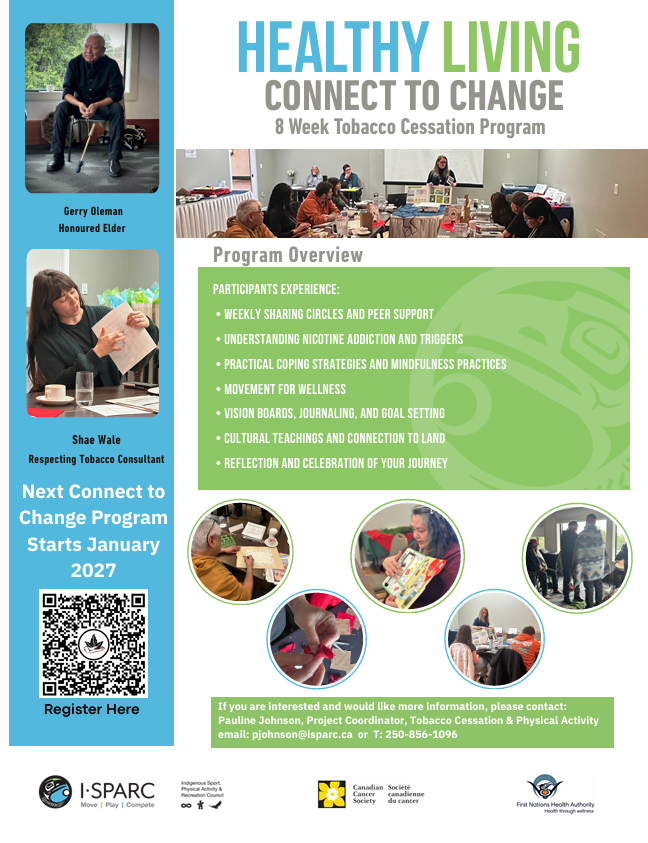
Connect to Change January 2027 Program

Resources
Commercial Tobacco Cost Analysis
Connect to Change SMARTER Goal Setting Worksheet
Connect to Change – Movement is Medicine Exercises
Links
Canadian Cancer Society
Smokers Helpline
First Nations Health Authority Respecting Tobacco

